
AT Commands
| Command | Response | Description |
|---|---|---|
| AT+IPR? | +IPR: 0 OK |
Port speed: 0 – auto 1200 2400 4800 9600 19200 38400 57600 115200 |
| AT+ICF? | +ICF: 3,3 OK |
Transmission settings. First parameter: Bits/parity/stop bits 1 – 8/0/2 2 – 8/1/1 3 – 8/0/1 4 – 7/0/2 5 – 7/1/1 6 – 7/0/1 Second parameter – parity: 0 – odd 1 – even 3 – none |
| AT+IFC? | +IFC: 0,0 OK |
Flow control First parameter – terminal controlled by module Second parameter – module controlled by terminal 0 – none 1 – software (XON/XOFF) 2 – hardware (RTS/CTS) |
Information and Status
Module Information
| Command | Response | Description |
|---|---|---|
| AT+GCAP | +GCAP:+FCLASS,+CGSM OK |
Module capabilities |
| AT+GMM | SIMCOM_SIM900 OK |
Module identifier |
| AT+GMR | Revision:1137B09SIM900M64_ST OK |
Firmware revision |
| AT+GSN | 01322600XXXXXXX OK |
IMEI |
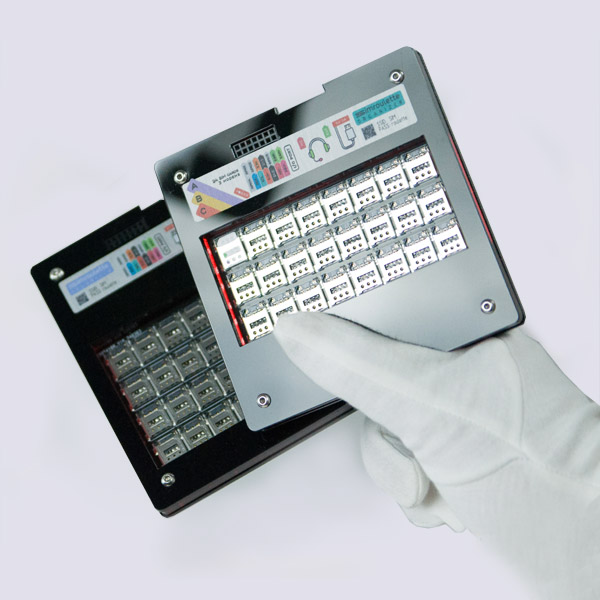
SR-Organizer-24-3
24 SIM cards, 3 GSM modems, headset and external device connection, Wi-Fi. Control via the local Web interface and the online control panel, GET and POST requests. Implement any workflows using user macros. Native Zennoposter support.Module Status Information
Settings
Calls
| Command | Response | Description |
|---|---|---|
| AT+CLIP=1 | OK | Caller ID (CLIP) 1 – on / 0 – off |
| AT+GSMBUSY=0 | OK | Block incoming calls 0 – allowed 1 – blocked |
| ATS0=0 | OK | Auto answer 0 – manual 1 or more – auto after the specified number of rings |
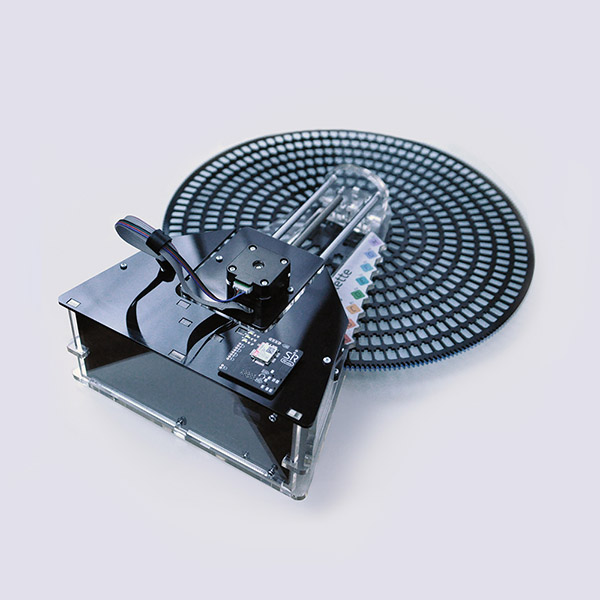
SR-Nano
500 or 1000 SIM cards, swappable modem module, headset connection, Wi-Fi. Control via the local Web interface and the online control panel, GET and POST requests. Multi-user mode. Implement any workflows using user macros. Native Zennoposter support.SMS
| Command | Response | Description |
|---|---|---|
| AT+CMGF=1 | OK | Text mode 1 – enable 0 – disable see note |
| AT+CSCS= "GSM" | OK | Character set for text mode Available encodings: IRA, GSM, UCS2, HEX, PCCP, PCDN, 8859-1 see note |
| AT+CSCB=0 | OK | Cell broadcast reception 0 – enabled (default) 1 – disabled |
Misc
| Command | Response | Description |
|---|---|---|
| ATE0 | OK | Echo 1 – on (default) / 0 – off |
| ATV1 | OK | Response format 0 – numeric result codes only 1 – verbose + echo (default) |
| AT+CMEE=0 | OK | Error reporting 0 – disabled (default) 1 – numeric errors 2 – verbose errors |
| AT+CCLK="13/09/25,13:25:33+05" | OK | Set clock “yy/mm/dd,hh:mm:ss+zz” Where: year/month/day, hours:minutes:seconds +time zone |
| AT+CPIN=XXXX | Enter PIN code | |
| ATZ0 | Reset settings to defaults (not factory) 0 or 1 – profile selection |
|
| AT&F | Restore factory settings | |
| AT&W | OK | Save settings to current profile Parameter 0 or 1 — select profile Specify parameter right after command (AT&W0) |
| AT+CPOWD=1 | NORMAL POWER DOWN | Power off module 0 – urgent 1 – normal |
| AT+CFUN=1,1 | Functional mode & reboot First parameter: 0 – minimum functionality 1 – full functionality (default) 2 – disable RF transmit/receive Second parameter: 0 – apply without reboot 1 – reboot (available only in full mode, i.e., 1,1) |
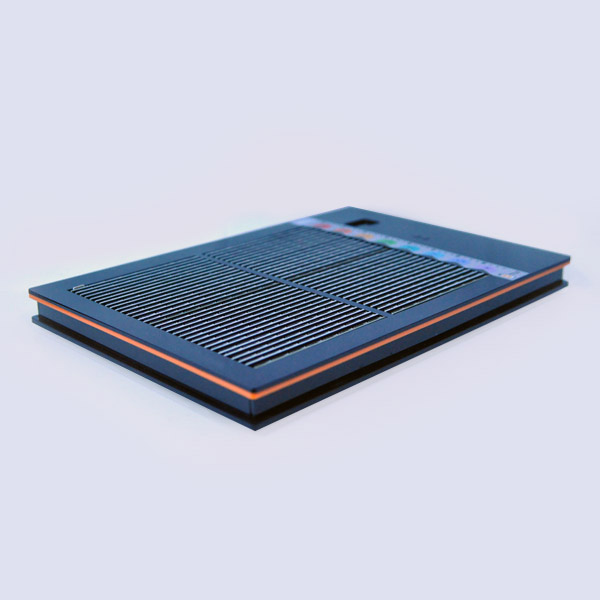
SIM Bank
For 512 SIM cards, made of 8 compact swappable modules with 64 Nano-SIM each. For use with SR-Box aggregators of any model.Phone Calls
| Command | Response | Description |
|---|---|---|
| ATD+790XXXXXXXX; | OK | Dial number +790XXXXXXXX; |
| NO DIALTONE BUSY NO CARRIER NO ANSWER |
No dial tone Call rejected Call dropped No answer |
|
| ATDL | OK | Redial last outgoing number |
| ATA | OK | Answer call |
| ATH0 | OK | Hang up / disconnect |
| RING | Incoming call | |
| AT+CLIP=1 | OK | see settings |
| RING +CLIP: "+790XXXXXXXX",145,"",,"",0 |
Incoming call with CLIP enabled Where: First parameter – caller’s phone number 2 – type of number (TON) 129 – unknown 161 – national 145 – international 177 – network/special |
SMS
Commands are shown for text mode with GSM character set.
|
Command |
Response |
Description |
|---|---|---|
| AT+CMGS="+790XXXXXXXX" >Test sms. sim-roulette.com |
> +CMGS: 15 OK |
Send SMS. Specify the recipient’s number in quotes and send to the module followed by a line break (ASCII 13). After the “>” prompt, enter the message text. To send, finish with SUB (ASCII 26), or ESC (27) to cancel. |
| AT+CMGF=1 AT+CSCS= "GSM" |
Mode and encoding. see settings and note |
|
| +CMTI: "SM",4 | New SMS indication. Second parameter is the index of the incoming SMS. |
|
| AT+CMGL="REC UNREAD" | +CMGL: 4,"REC UNREAD","+790XXXXXXXX","","13/09/24,23:02:22+24" Test2. OK |
Read SMS by folder. There are 5 folders: REC UNREAD – inbox unread REC READ – inbox read STO UNSENT – user unsent STO SENT – user sent ALL – read all messages |
| AT+CMGR=2 | +CMGR: "REC READ","+790XXXXXXXX","","13/09/21,11:57:46+24" Test sms. sim-roulette.com OK |
Read an SMS. Request: First parameter – message index. Second parameter (optional): 0 – normal (default) 1 – do not change message status Response: First parameter – folder, see above. Second parameter – sender’s number 3 – sent date/time Then the message text follows. |
| AT+CMGDA="DEL SENT" | OK | Delete SMS by folder: DEL READ — read DEL UNREAD — unread DEL SENT — sent DEL UNSENT — unsent DEL INBOX — received DEL ALL — all messages |
| AT+CMGD=4 | OK | Delete an SMS. First parameter – message index Second parameter: 0 – delete the specified message (default) 1 – delete read messages 2 – delete read and sent messages 3 – delete read, sent and unsent messages 4 – delete all messages |
| AT+CSCA? | +CSCA: "+79126313431",145 OK |
Return SMSC (service center) number. |
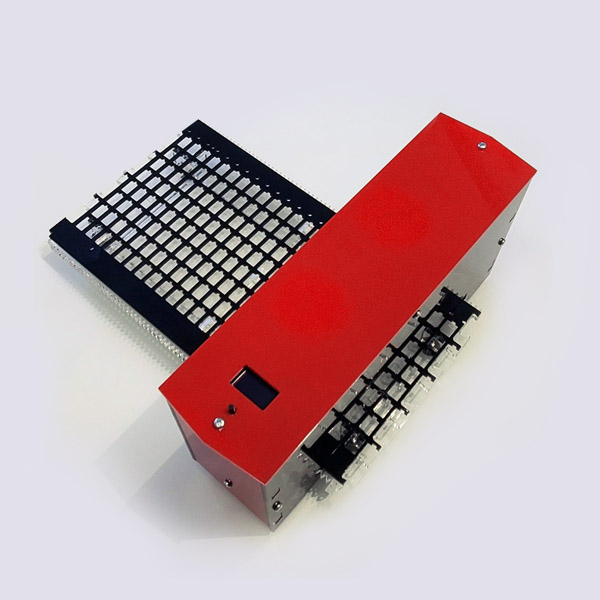
SR-Train
Unlimited number of SIM cards, 16 GSM modems, Wi-Fi. Control via the local Web interface and the online control panel, GET and POST requests. Multi-user mode. Implement any workflows using user macros. Native Zennoposter support.DTMF
Tone keys: 0–9, #, *, A–D
| Command | Response | Description |
|---|---|---|
| AT+VTD=3 | OK | DTMF tone duration used by AT+VTS. Parameter value 1..255 |
| AT+VTS="1,4,#,A,6,7,0" | OK | Send a DTMF sequence (up to 20 tones). Duration is set by AT+VTD. |
| AT+CLDTMF=7, "1,4,#,A,6,7,0" | OK | Play DTMF tones on the module (via audio out). First parameter — duration 1–100 Second parameter – tone string, up to 20. |
USSD
Commands are shown for text mode with GSM character set.
| Command | Response | Description |
|---|---|---|
| AT+CUSD=1,"#100#" | OK +CUSD: 0,"Balance:240,68r ", |
USSD request First parameter – operation mode: 0 – send request, ignore response 1 – send request, return response 2 – cancel request Second parameter – request in quotes. |
| ATD#100#; | OK +CUSD: 0,"Balance:240,68r ", |
Simplified USSD request (works only with GSM charset) |
There are two USSD formats: starting with * and starting with #. In the first case, the response arrives in Russian; in the second, in Latin characters, if supported by the operator.
Display mode is the same as for SMS.
Note on text mode and encoding
The chosen mode (PDU or text) and character set affect the format of numbers, USSD requests, and incoming/outgoing SMS.
The most universal option is PDU mode, since it can reliably send/receive any text data; it is not covered here in detail.
The simplest option is the GSM character set. Numbers are entered in the usual numeric way; outgoing and incoming messages (SMS and USSD) in Latin are displayed correctly. Cyrillic is more complex: incoming messages appear in UNICODE, more precisely as UNICODE HEX values. Outgoing with Cyrillic are even trickier!
The more advanced option is UCS2. Incoming and outgoing messages, USSD requests, and phone numbers in requests — everything is written in UNICODE. Simplified USSD requests do not work.
Example (phone number replaced with +79012345678, line breaks added):
| Encoding & mode | Request | Response |
|---|---|---|
| PDU | AT+CMGR=2 | +CMGR: 1,"",38 07919720780110F0000B919710325476F800003190121 175644215D4F29C0E9AB7E72E50985DC6B7CAF8B24B5E07 OK |
| AT+CMGR=3 | +CMGR: 1,"",59 07919720780110F0000B919710325476F800083190122 185134228005400650073007400200073006D00730020 0032002E0020042204350441044200200441043C0441 OK |
|
| GSM | AT+CMGR=2 | +CMGR: "REC READ","+79012345678","","13/09/21,11:57:46+24" Test sms. sim-roulette.com OK |
| AT+CMGR=3 | AT+CMGR=3 +CMGR: "REC READ","+79012345678","","13/09/21,12:58:31+24" 005400650073007400200073006D007300200032 002E0020042204350441044200200441043C0441 OK |
|
| AT+CUSD=1,"#100#" | OK +CUSD: 0,"Balance:240,68r ", |
|
| UCS2 | AT+CMGR=2 | +CMGR: "REC READ","002B0037003900300031 0032003300340035003600370038","","13/09/21,11:57:46+24" 005400650073007400200073006D0073002E0020 0061006C00650078002D006500780065002E00720075 OK |
| AT+CMGR=3 | +CMGR: "REC READ","002B00370039003000310032 003300340035003600370038","","13/09/21,12:58:31+24" 005400650073007400200073006D007300200032 002E0020042204350441044200200441043C0441 OK |
|
| AT+CUSD=1,"00230031 003000300023" |
OK +CUSD: 0,"00420061006C0061006E00630065003A0032 00340030002C0036003800720020",64 |
The text returned for “AT+CMGR=3” — “Test sms 2. Тест смс”
UNICODE
In Unicode, characters are represented as hexadecimal numbers. The first 127 characters map directly to HEX; for Cyrillic, an offset of 350h is applied.
Example: 1 – 0031, G – 0047, z — 007A, Ы — 042B, я — 044F